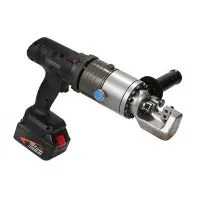

I. Targeted Protection Measures for Key Components
1. Blade Protection
The blade is the core working part of a portable rebar cutter and is easy to be damaged by collision and friction during transportation so it needs priority protection. Before transportation install a dedicated blade protection cover (such as rubber or metal cover) to ensure the blade is completely wrapped and avoid direct contact between the blade and other objects which may cause chipping or curling; if the device has no original protection cover wrap the blade with thick cotton cloth and fix it with tape to prevent the cloth from shifting. If the blade has slight wear or gaps put a layer of soft foam inside the protection cover to reduce friction between the blade and the cover during bumpy transportation and avoid worsening wear.
2. Power and Control Component Protection
Electric models:Check whether the power cord and battery connecting wires are neatly folded and use cable ties to fix the wires on the side of the machine body to prevent the wires from hanging. At the same time install a separate insulating protection box for the battery (especially removable batteries) to prevent the battery from leaking or short-circuiting due to extrusion during transportation; store the charger separately from the device to avoid the charger plug scratching the machine body or damaging the device interface.
Hydraulic models:Check whether the hydraulic oil filling port is tightly sealed (if the filling port has a knob make sure the knob is tightened) and put dust caps on the hydraulic oil pipe joints to prevent dust and impurities from entering the oil pipe. Fix the hydraulic operating lever at the "off" gear and use rubber bands or straps to bind the operating lever to the machine body to prevent accidental triggering of the operating lever due to transportation bumps.
3. Body and Casing Protection
If the device body has no anti-slip or anti-scratch coating wrap the body with pearl cotton or bubble film during transportation (focus on wrapping the body corners and operation button areas) to reduce the impact of collision on the body shell and avoid shell depression and button damage; for the body display (such as the power and pressure display of some intelligent models) stick a layer of explosion-proof film on the screen surface and then cover it with a foam buffer layer.
II. Securing and Environmental Adaptation During Transportation
1. Loading and Securing Requirements
When carrying use a dedicated storage box (preferably a box with partitions and foam-lined interior) and place the device battery charger spare blades and other accessories in separate partitions to avoid collision between accessories; if using an ordinary toolbox fill the box with soft cloth foam and other buffer materials to ensure the device has no room for shaking inside the box. If transporting by vehicle (such as a truck or electric vehicle) fix the device in the carriage (such as tying the body to the carriage hook with a rope or placing it in the carriage corner and blocking it with hard objects) to prevent the device from sliding when the vehicle brakes suddenly or turns; do not stack the device under other heavy objects to prevent the device from deforming due to heavy pressure.
2. Environmental Adaptability
Avoid transporting outdoors in humid rainy or snowy weather. If outdoor transportation is necessary cover the device with a waterproof and dustproof cover (such as a PVC waterproof cover) to prevent rain and snow from seeping into the device which may cause short circuit of the electric model and emulsification of hydraulic oil of the hydraulic model. When transporting in high-temperature environments (such as in the carriage in summer) avoid long-term exposure of the device to the sun and place the device in a shaded area. For hydraulic devices check the hydraulic oil temperature (if the temperature is too high let it stand to cool down first) to prevent high temperature from causing hydraulic oil expansion and accelerating the aging of seals.
III. Key Points for Special Scenarios
1. Long-Distance Transportation (such as Across Construction Sites)
Mark the "Fragile Handle with Care" sign on the device packaging to remind transporters to take protective measures; if the device weight exceeds 10kg install a wooden pallet at the bottom of the packaging to facilitate loading and unloading (avoiding hand fatigue or device slipping caused by carrying the device directly by hand). Before transportation record the device status (such as blade wear degree battery power hydraulic oil level) and unpack and inspect the device immediately after arriving at the destination to confirm the device is undamaged before use.
2. Short-Distance Transport (e.g., Within a Construction Site)
If the device is equipped with a handle check whether the handle connection part is firm (such as whether the screws are loose) to prevent the handle from breaking and causing the device to fall during carrying; for models without a handle support the bottom of the body with both hands (instead of only holding the operating lever or blade part) to keep the device stable and prevent parts from falling due to tilting. When transporting within the construction site avoid obstacles such as rebar piles and building material storage areas and prevent the device from colliding with hard objects such as rebars and steel pipes. Pay special attention to protecting vulnerable parts such as blades and hydraulic joints.