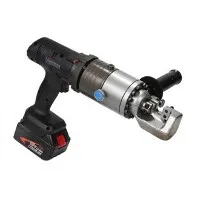

A hydraulic rebar bending machine is mainly composed of the following main parts:
Hydraulic system: This is the core component of the hydraulic rebar bending machine, responsible for providing the hydraulic pressure required to bend the rebar. The hydraulic system is usually composed of components such as an oil tank, an oil pump, a hydraulic valve, and a hydraulic cylinder. The oil pump extracts the hydraulic oil from the oil tank and controls the advance and retreat of the hydraulic cylinder through the hydraulic valve to achieve the bending of the rebar.
Frame: The frame is the supporting structure of the hydraulic rebar bending machine, which is used to fix and support various components. It is usually made of high-strength steel and has sufficient rigidity and stability to ensure that the machine does not produce excessive deformation or vibration when bending the rebar.
Workbench: The workbench is where the rebar is placed and clamped. It is usually equipped with an adjustable clamping device to fix the position of the rebar for precise bending operations. The design of the workbench should facilitate the placement and removal of the rebar while ensuring the safety of the operator.
Bending die: The bending die is an important component of the hydraulic rebar bending machine, which is used to achieve the bending of the rebar. The shape and size of the die should be determined according to the specifications and angles of the rebar to be bent. During the bending process, the mold will fit the steel bar tightly and bend it through the thrust of the hydraulic cylinder.
Electrical control system: The electrical control system is used to control the start, stop and turn of the hydraulic steel bar bending machine. It usually consists of components such as motors, control buttons, indicator lights, etc. to ensure that the machine can operate accurately according to the operator's instructions.
Safety protection device: In order to ensure the safety of the operator, the hydraulic steel bar bending machine is usually equipped with safety protection devices, such as protective covers, safety doors, etc. These devices can prevent the operator from contacting dangerous parts when the machine is running, reducing the probability of accidents.